

[Complete Guide to Breast Augmentation] Say Goodbye to Postpartum Sagging Baggy Breasts! Surgical Costs, Scar Recovery Period, and Recommendations from Authoritative Doctors All in One Go!
Table of Contents
- Why has my breast become like a deflated bag?
- What type of sagging level do you belong to?
- Three Common Methods of Breast Lift Surgery
- Comparison table of three common breast lift surgery methods
- Complete Analysis of Breast Lift Surgery Process
- Breast lift surgery core strategy
- Enherya breast lift surgery before and after photos
- These 5 types of people are not recommended to undergo breast lift surgery.
- How to choose a reputable breast lift and augmentation doctor? 4 golden indicators from authoritative physicians.
- Common Questions about Breast Lift (FAQ)
- Breast Lift Surgery Education and Recovery Guidelines
- Will the scars from breast lift surgery disappear?
- Breast lift surgery case video
- Recommended surgeons for breast lift surgery in Taipei, Tainan, and Kaohsiung
- Breast lift surgery regains confidence
- Contact Enherya to evaluate breast lift surgery.
Many postpartum mothers or women who have experienced significant weight loss have this kind of trouble: clearly the cup size has decreased, but when wearing a bra, they find loose skin and sagging flesh, even encountering the embarrassing situation of "more skin than flesh." At this time, simple breast augmentation or simple breast lift cannot perfectly solve the problem.
唯有透過「Breast lift combined with breast augmentation surgery" and also solve " Volume loss」與「Skin laxity」Two major problemsto truly regain the youthful and firm breast shape. This article will delve into the principles of the surgery, the truth about scars, and the latest "invisible bra" reinforcement technology.
Why has my breast become saggy?
Before delving into the details of the surgery, we must first understand the causes of breast structure collapse.The firmness of the breasts mainly relies on the tightness of the skin and the support of the internal Cooper's ligaments.。
When experiencing the cycle of pregnancy, breast swelling, breastfeeding, and weaning, or a rapid weight loss in a short period, the skin loses its elasticity like a deflated balloon. At this time, the breast tissue (meat) has atrophied, but the skin (skin) has increased, and gravity pulls the breasts downward.
What type of sagging level do you belong to?
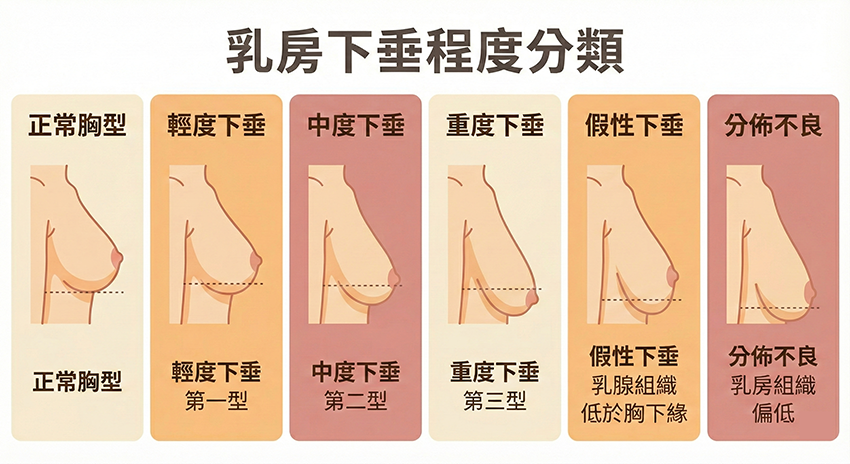
In medicine, we use the Regnault classification method to determine the relative position of the "nipple" and the "inframammary fold (IMF)".
-
Pseudoptosis:
-
Feature: Although the breast tissue (flesh) hangs below the lower edge of the breast, the nipple position is still above the lower edge of the breast.
-
SolutionUsually, a breast lift is not necessary; simple breast augmentation (to fill volume) can support the skin.
-
-
Grade I: Mild Sagging
-
Feature: The nipple position is parallel to the inframammary fold (or within 1 centimeter below).
-
-
Grade II moderate sagging:
-
Feature: The nipple is below the inframammary fold (1-3 cm), but the nipple direction is still facing forward.
-
-
Grade III severe sagging:
-
Features: The nipples are significantly lower than the inframammary fold, and the nipples are directly facing the floor.
-
If you are at level two or three of sagging, simply having breast augmentation will result in "Snoopy Deformity," where the implant is lifted on top, but the original breast tissue hangs down like a waterfall. Therefore, "breast lift + breast augmentation" is the only solution.
Three Common Methods of Breast Lift Surgery
Breast lift surgery is not "a single incision suitable for everyone." The doctor must determine "where to remove excess skin" and "how much to remove" based on the level of breast sagging and the degree of skin laxity.
The current international mainstream surgical methods are mainly divided into the following three types. The smaller the incision range, the fewer the scars, but the lifting effect is also relatively limited; conversely, the larger the incision range, the more severe the sagging that can be corrected.
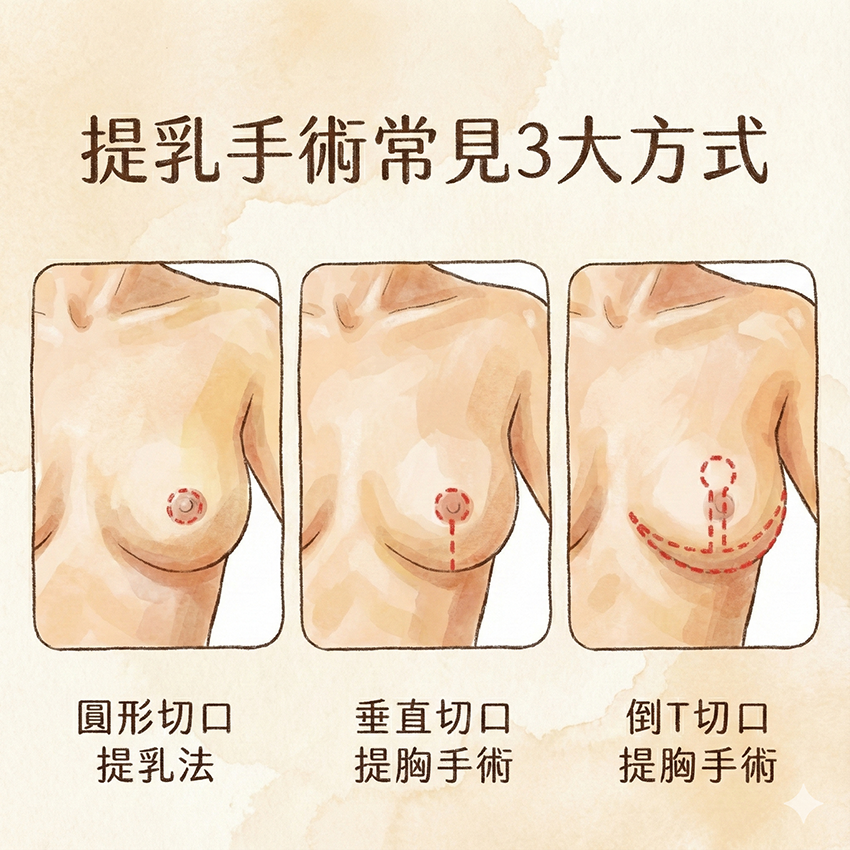
1. Round incision
-
Surgical principle: A ring of donut-shaped skin is excised along the edge of the areola, and the surrounding skin is sutured inward to elevate the nipple position.
-
Suitable candidates:
-
Mild sagging (Grade I).
-
Those who only need to reduce the areola.
-
Those who do not need to remove too much skin and simply want to adjust the position of the nipples.
-
-
Advantages: The scar area is minimal, hidden only at the junction around the areola, and is not obvious.
-
Disadvantages: The lifting force is the weakest. If used for severe sagging, it can easily cause the breasts to become flat (like a flattened dough), losing their three-dimensionality.
2. Vertical incision
-
Surgical principle: The incision includes a circle around the areola and extends with a vertical downward incision (looking like a lollipop). This is currently the most suitable procedure for most postpartum women.
-
Suitable candidates:
-
Moderate sagging (Grade II).
-
Women who have breast atrophy and loose skin after childbirth.
-
-
Advantages: It can effectively tighten the loose skin of the lower half of the breasts and reshape the glandular tissue into a conical shape, resulting in a more uplifted breast shape after surgery.
-
Disadvantages: There will be an additional vertical scar at the lower edge of the breast, but with proper care, it usually fades in about a year.
3. Inverted T incision
-
Surgical principle: The incision includes the areola, a vertical line, and a horizontal incision along the lower edge of the breast (which looks like an anchor). This is a traditional and powerful method of breast lift.
-
Suitable candidates:
-
Severe sagging (Grade III): The nipple is more than 3 centimeters below the inframammary fold.
-
Gigantomastia combined with sagging (requires simultaneous breast reduction).
-
Individuals with extremely loose skin after significant weight loss.
-
-
Advantages: It can remove the maximum amount of excess skin and completely reshape the breast's form.
-
Disadvantages: The longest scars, and the surgery time and recovery period are relatively longer.
Comparison table of three common breast lift surgery methods
| Surgical methods | Incision shape | Suitable degree of sagging | Scar location | Advantages Analysis | Disadvantages/Limitations |
|
Round incisionDoughnut-shaped |
Circular |
mild (GradeI) |
Only around the areola. | The scars are the least noticeable, and recovery is quick. | The lifting effect is limited, unable to improve severe sagging, and can easily cause a flat breast shape. |
|
Vertical incision/Lollipop style |
Round + Vertical Line |
Moderate (GradeII) |
Vertical line around and below the areola | The highest cost-performance ratio. It can effectively tighten the skin and create a three-dimensional conical breast shape. | Vertical scars take time to fade, and the technical threshold is relatively high. |
|
Inverted T incisionAnchor type |
Circle + Vertical line + Horizontal line |
severe (GradeIII) |
Areola + Vertical + Inframammary fold | Can remove a large amount of excess skin, with the strongest corrective effect. | The longest scar, longer recovery period. |
Full Analysis of Breast Lift Surgery Process
According to the standard operating procedure (SOP) for plastic surgery, breast lift surgery typically includes the following five major steps:
Step 1: Precise preoperative measurement and marking. This is the most critical step. The doctor will measure the distance from the clavicle to the nipple, the breast base width (BW), while you are standing, and mark the new nipple position and the area of skin to be excised.
Step 2: General anesthesia is required because the surgery involves delicate tissue dissection and suturing, and the entire procedure should be performed under general anesthesia. It is usually recommended that a specialized anesthesiologist carry out the procedure to ensure safety.
Step 3: Removal of excess skin and tissue reconstruction
-
The doctor precisely removes the excess loose skin based on the chosen incision (round incision/vertical incision/inverted T incision).
-
Suspend and fix the sagging breast tissue upwards to the fascia of the pectoralis major.
-
(If combined with breast augmentation): In this step, a space will be created, and an implant (such as a magic drop) will be inserted to increase fullness.
Step 4: The repositioning of the nipple-areola complex involves moving the nipple and areola up to a new ideal height (usually at the horizontal line of the midpoint of the upper arm), while also performing a reduction and adjustment of the areola.
Step 5: Multi-layer precision suturing uses absorbable threads for subcutaneous tension-reducing sutures (to reduce the pulling force that causes scar widening), while the epidermis is sutured with fine threads. Postoperatively, a medical-grade compression garment is usually worn to stabilize the breast shape and reduce swelling.
Breast lift surgery core strategy
This surgery is regarded as one of the procedures with a high technical threshold in plastic surgery, as the physician must simultaneously calculate "how much volume (implant) to add" and "how much skin (lift) to remove."
1. Selection of implants: Why recommend MoDi?
In breast lift surgery, due to the looseness of the skin, we need an implant that can closely adhere to the tissue.
-
Nano silk surface: The surface design of Motiva Magic Drop can reduce the probability of capsular contracture, and it presents a natural droplet shape when standing, making it very suitable for postpartum mothers with thinner subcutaneous fat.
-
Size recommendation: Experts suggest not to be greedy for size. Oversized implants (such as those over 350cc) will increase the burden on the skin, leading to "secondary sagging" a few years later. A moderate size (275cc~325cc) usually maintains the best long-term uplift effect.
2. Placement Layer: Dual Plane Technique
In order to avoid the obvious feeling of the implant edges and provide sufficient support, the standard practice is to use "dual plane" placement:
-
The upper part is covered under the pectoralis major: it modifies the upper chest edge to avoid wave patterns.
-
The lower half is covered under the fascia: allowing the implant to naturally support the lower edge of the breast, creating a rounded appearance.
3. Advanced technology: "Invisible Bra" artificial dermis reinforcement
This is the trend of advanced surgery for 2024-2025. For patients with extremely loose skin, the doctor will additionally sew a layer of artificial dermis or biological patch (such as GalaFLEX) under the edge of the implant.
-
Function: Just like wearing a steel ring bra inside the body, this layer of patch can support the prosthesis like a hammock, preventing the prosthesis from sliding down and reducing the weight pressure on the skin, significantly extending the warranty period of the surgical effect.
🔗Click me to see:What is invisible bra GalaFLEX
Enherya breast lift surgery before and after photos
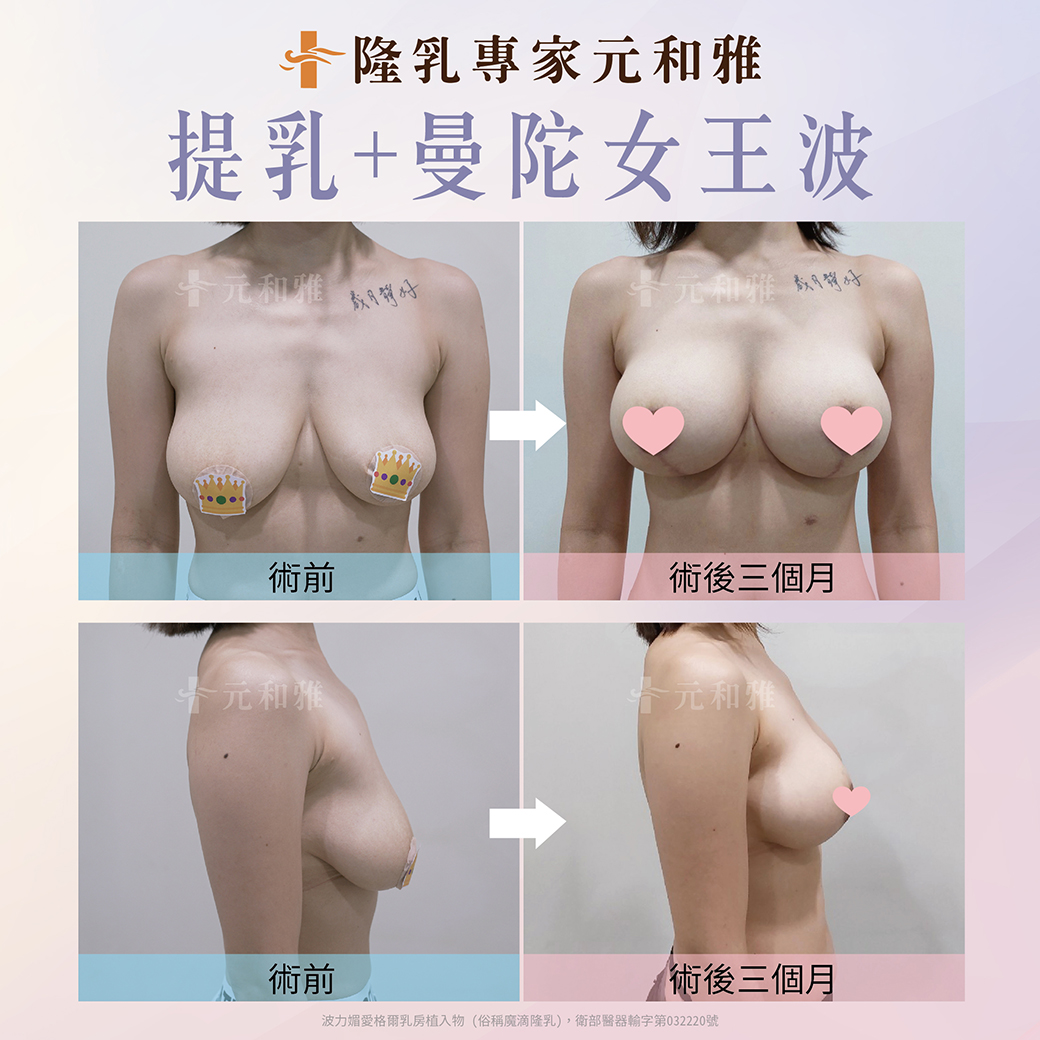
🔗Click here to see Case One: Breast Lift + Breast Augmentation Article
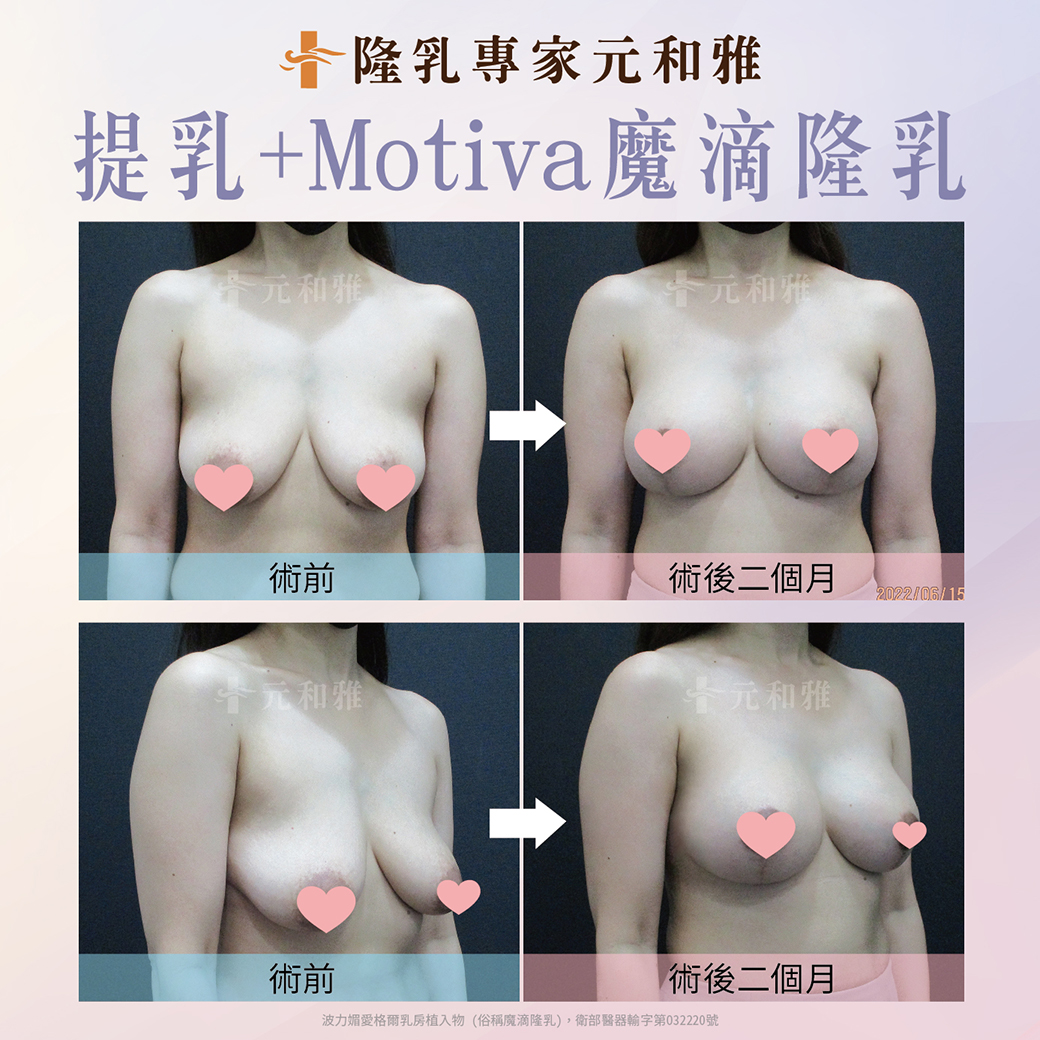
🔗Click here to see Case Study 2: Breast Lift + Breast Augmentation Article
These 5 types of people are not recommended to undergo breast lift surgery.
Although breast lift combined with breast augmentation surgery can significantly improve body shape, it is not suitable for everyone due to the complex skin removal and tissue reconstruction involved. For your safety and postoperative results, if you meet the following conditions, doctors usually recommend postponing or refusing the surgery.
1. Severe nicotine dependents (addicts)
This is an absolute contraindication for breast lift surgery.
-
Reason:Nicotine can cause peripheral blood vessel constriction, severely affecting blood circulation. Breast lift surgery requires the detachment of flaps, and if blood supply is insufficient, it can easily lead to nipple ischemia, necrosis, or wound dehiscence.
-
Recommendation: Strictly refrain from smoking (including e-cigarettes) for at least 4-6 weeks before and after the surgery. If this cannot be achieved, please do not proceed with the surgery.
2. Those who plan to become pregnant within the next 1-2 years.
-
Reason:This is not a medical danger, but a consideration of "effect." Hormonal changes and milk engorgement during pregnancy can stretch the newly tightened skin again, rendering the surgery ineffective and requiring a second repair.
-
Suggestion: The most ideal timing for surgery is "after confirming that you will not have more children" and "6 months after weaning."
3. Those with high BMI or unstable weight
-
Reason:Obesity (BMI > 30) increases the risk of anesthesia and wound infection rates. In addition, if there are plans for significant weight loss after surgery (for example, losing more than 10 kilograms), the loss of breast fat can lead to skin loosening and sagging again.
-
Suggestion: First, control your weight within the ideal range and stabilize it for six months before undergoing surgery for the most lasting effect.
4. Suffering from uncontrolled chronic diseases
-
Diabetes:High blood sugar can affect wound healing and increase the risk of infection.
-
Abnormal coagulation function: Those with hemophilia or those who have been on anticoagulants for a long time are prone to postoperative hematoma.
-
Autoimmune diseases: may affect the rejection reaction of implanted prosthetics.
5. Those with extreme perfectionism towards scars
-
Reason:Breast lift surgery will definitely leave scars. Although modern technology can reduce the appearance of scars, they cannot completely disappear. If the patient cannot accept any marks on the breast or has a severe keloid tendency, this surgery may not be suitable for you.
How to choose a renowned breast lift and augmentation doctor? 4 golden indicators from authoritative physicians.
Breast lift combined with breast augmentation is one of the surgeries with high technical value in plastic surgery. The physician not only needs to have experience in breast augmentation but must also possess the ability to design precise flaps. Choosing the wrong physician may lead to risks such as nipple necrosis, asymmetry between the sides, or implant exposure.
When searching for recommendations on PTT and Dcard,Please be sure to filter according to the following four major indicators.:
Indicator 1: Must possess a "Board Certified Plastic Surgeon" certificate.
This is the most basic threshold. Breast lift surgery involves complex tissue anatomy and flap transfer, and non-specialist surgeons may lack relevant reconstructive training.
-
Verification method: Please visit the Ministry of Health and Welfare website to check whether the doctor has the qualification of "Plastic Surgery" specialty, rather than just having a "Aesthetic Medicine" certificate.
Indicator 2: Possessing a wealth of practical "breast lift" cases
Many doctors are skilled in breast augmentation (as long as they place implants), but they may not necessarily be skilled in breast lift (which requires skin repair).
-
Observation points: During the consultation, please ask the doctor to show you pre-operative and post-operative comparison photos that are "similar to your degree of sagging."Key Observations:
-
Scar refinement: Is it smooth? Is the color too dark?
-
Nipple position: Is it symmetrical? Is it too high or too low?
-
Side curvature: whether a beautiful waterfall line (teardrop shape) is formed, rather than presenting a strange shape like a "Snoopy nose."
-
Indicator 3: Persist in the allocation of "full-time anesthesiologist"
Breast lift combined with breast augmentation surgery takes longer (about 4-5 hours), and the safety of anesthesia is crucial.
-
Key issue: Please confirm whether the clinic is monitored throughout by an "anesthesiologist" and not by the surgeon or nurse acting as the anesthetist (this is very dangerous).
Indicator Four: Objective and Conservative Consultation Style
A truly professional breast lift surgeon will not simply promise "scarless" or promote "super large cup sizes."
-
Characteristics of quality physicians: They take the time to explain the location of scars, measure your skin laxity, and honestly inform you of the risks of sagging if overly large implants are used. They tailor the plan according to your chest condition rather than applying a fixed template.
Common Questions About Breast Lift (FAQ)
What is the approximate cost of a breast lift combined with breast augmentation?
This is a composite surgery, and the cost structure typically includes the "breast augmentation fee" + "breast lift fee" + "anesthesia and materials." In Taiwan, depending on the physician's experience and the choice of implant (such as Motiva), the reasonable range is approximately NT$350,000 to NT$500,000. If artificial dermis is added, the cost will increase.
Can I breastfeed after breast lift surgery?
Modern breast lift techniques (such as the inner pedicle or superior pedicle flap techniques) carefully preserve the nerves and blood supply to the nipple, typically not affecting breastfeeding function. However, if you have future pregnancy plans, it is strongly recommended to wait until after your abdomen is closed (when you are certain you will not have more children) before undergoing surgery, to avoid the risk of engorgement damaging the newly restored breast shape.
Will breast augmentation surgery cause loss of sensation in the nipples?
In the early postoperative period, due to nerve tension, the nipples may temporarily become numb or overly sensitive, and will gradually return to normal within about 3 to 6 months. The risk of permanent loss of sensation is extremely low (less than 5%).
Breast Lift Surgery Education and Recovery Guide
Breast lift surgery involves the removal and suturing of skin, so postoperative care is more meticulous than simple breast augmentation. The following is divided into three main points: "Wound care," "Daily routine," and "Recovery timeline."
1. Post-operative golden care guidelines
1. About clothing: Medical-grade shapewear is key.
Within one month after surgery, it is necessary to wear the "full coverage wireless bodysuit" or "medical chest binder" specified by the doctor at all times.
-
Purpose: To provide uniform pressure, reduce postoperative hematoma and tissue edema, and stabilize the position of the implant to prevent displacement.
-
Taboo: It is strictly forbidden to wear concentrated type or underwired bras within 3 months after surgery, to avoid pressure on the wound that may lead to poor healing or deformation.
2. Wound Care and Scar Management
Scar care after breast lift surgery is a long-term battle, divided into three stages:
-
Stage 1 (Postoperative 0-14 days): Keep the wound dry and clean. If there is oozing blood or tissue fluid, gently wipe with a sterile cotton swab dipped in saline and apply antibiotic ointment.
-
Stage Two (3 months after suture removal): Start using "beauty tape." It should be applied vertically to the wound, with the purpose of providing tension support to prevent the scar from widening.
-
Stage three (3 months later): After the wound has healed and stabilized, you can start using "scar removal gel" or "silicone patches," and depending on the situation, combine it with picosecond laser treatment to lighten pigmentation.
3. About massage: Please follow the doctor's advice.
-
Pure breast lift: Usually does not require massage to avoid pulling the freshly sutured flaps.
-
Breast lift combined with breast augmentation: If using Motiva or textured implants, usually no massage is required; if using smooth implants, light squeezing should be done according to the doctor's instructions.
-
Important reminder: Do not massage vigorously on your own to avoid causing the wound to open or subcutaneous bleeding.
-
2. Daily Routine and Taboo
Absolutely prohibited
-
Smoking prohibition (including secondhand smoke and electronic cigarettes): This is a strict rule for breast lift surgery. Nicotine constricts blood vessels, which greatly increases the risk of nipple ischemia, necrosis, or wound discoloration. Smoking should be avoided for at least one month post-surgery.
-
Avoid lifting heavy objects: Within one month after surgery, avoid lifting items over 3 kilograms, or holding children and pets, to prevent excessive strain on the pectoral muscles that could compress the implants.
-
Do not raise your hands too high: Within 2 weeks after surgery, do not raise your elbows above your shoulders to avoid pulling the wounds in the armpit and chest.
[Dietary Recommendations]
-
Increase protein intake: fish, meat, eggs, milk, to promote wound healing.
-
Supplementing Vitamin C: Helps with collagen synthesis.
-
Avoid blood-activating foods: Avoid ginseng, angelica, ginkgo, fish oil, and alcohol within 2 weeks after surgery to reduce the risk of increased bleeding.
[Sleep Position]
-
It is recommended to sleep in a semi-reclining position (with the back elevated at 30-45 degrees) within one week after surgery, which can help reduce swelling and alleviate the tightness of the skin.
-
Sleeping on your stomach is prohibited within 3 months after surgery to avoid pressure on the implants.
3. Recovery Timeline
Understanding the changes at each stage can reduce your anxiety.
| 時間 | Physical condition | Precautions |
| 1-3 days post-operation | Swelling peak period. The breasts may feel tight and painful, possibly accompanied by bruising. | Ice compresses should be applied regularly (15 minutes each time, with a 1-hour interval), and hot compresses are not allowed. If there are drainage tubes, the flow rate must be recorded. |
| 7-10 days post-operation | Suture removal period. Swelling begins to subside, and bruises turn yellow. | You can shower 24 hours after the stitches are removed (the wound must be dried immediately after showering). |
| Two weeks post-surgery | Stabilization period. The pain significantly decreases, and one can return to regular office work. | Still need to limit arm-raising movements and continue wearing a corset. |
| One month after surgery | Swelling reduced by 60-70%. The initial shape of the breast contour is revealed. | Light exercise (such as lower body stretching) can begin, but avoid heavy chest training. |
| 3-6 months after surgery | Mature stage. The scar changes from red to light, the implant position naturally drops, and the texture becomes softer. | The golden period for scar care is when laser scar removal treatments can begin. |
Emergency situations: When should you return for an appointment immediately?
If any of the following situations occur after surgery, please do not wait and contact your medical team immediately:
-
Nipple color change: If the nipple turns purple, black, or pale (indicating impaired blood circulation).
-
Sudden swelling on one side: This may be a sign of a hematoma.
-
Fever: body temperature exceeds 38 degrees, and the wound is red, swollen, hot, and painful (signs of infection).
-
Shortness of breath: feeling chest tightness and rapid breathing.
Will the scars from breast lift surgery disappear?
When consulting about breast lift surgery, the question patients ask most often is: "Doctor, will the wound look ugly? Will the scar last a lifetime?"
We must honestly tell you:Yes, wherever one goes, there will be traces left behind; breast lift surgery will definitely leave scars.。But please don't rush to back out, because modern plastic surgery's suturing techniques and postoperative care can make these scars "invisible" to the point that you can almost ignore their existence.
1. The nature of the wound: a transaction of "exchanging lines for shape"
The core of breast lift surgery lies in the removal of excess loose skin. Imagine trying to tailor a loose piece of clothing to fit; it inevitably requires cutting and resewing. This is a "trade-off": you exchange a fine scar for a youthful breast shape that is firm, full, and no longer sagging for the next 10 or 20 years. For the vast majority of postoperative patients, this is a very worthwhile deal.
2. The Three Stages of Wound Healing
The wound will not always be red. Understanding the life cycle of scars can reduce your post-operative anxiety:
-
Phase One: Red Period (Postoperative 0-3 Months)
-
This is the inflammatory response phase of wound healing. At this time, the scar may appear red or dark red, and it may feel hard to the touch (tissue proliferation). This is the most obvious and unattractive period, so please be patient.
-
-
Second stage: Transition period (3 to 6 months post-surgery)
-
The color of the scar begins to fade, changing from red to pink, and the hardness gradually softens. This is the golden period for scar care.
-
-
Stage Three: Maturity (6 to 12 months post-operation)
-
Scars will eventually stabilize, fade from red, and turn into a fine white line close to skin color. If combined with laser treatment, this line will become very inconspicuous, even difficult to notice when wearing a bikini.
-
3. The secret weapon for making wounds invisible: multi-layered tension-reducing sutures
Why are some people's scars very wide, while others are like a line? The key lies in the physician's suturing technique. A professional breast lift surgeon will use the **"Tension-Free Suturing"** technique:
-
Deep fixation: Use strong absorbable sutures to tighten the dermis layer and the fascia layer, bearing all the tension.
-
Surface approximation: The epidermal layer is gently brought together using thread as fine as a hair.
-
As a result, because the epidermis does not have tension pulling, the scar after healing will not become wide or raised (keloid), but will be a smooth fine line.
4. Three Steps of Postoperative Scar Care
To have a beautiful wound, the doctor's suturing accounts for 50%, and your postoperative care accounts for 50%.
-
Beauty tape: Must be applied well and fully for the first 3 months after surgery. The tape can secure the skin on both sides of the wound, counteracting gravity and skin tension.
-
Scar gel: After 3 months, switch to a gel containing silicone to keep the stratum corneum moist and inhibit scar hyperplasia.
-
Pico laser: If you feel that the scar pigmentation is still deep after six months, you can combine it with pico laser to shatter the pigmentation and promote collagen remodeling, making the skin tone more even.
Doctor's summary: Don't let the fear of scars hinder your right to pursue beauty. Under the cover of clothing, no one can see that fine line; but once you put on clothes, everyone can see your upright and confident curves.
Breast lift surgery case video
Recommended surgeons for breast lift surgery in Taipei, Tainan, and Kaohsiung
Tainan, Kaohsiung breast lift doctor recommendations:Dr. Liu ZongxianGraduated from the Department of Medicine at Kaohsiung Medical University, formerly the Director of the Department of Plastic Surgery at Kaohsiung Municipal Xiaogang Hospital, and received complete training in plastic surgery at Kaohsiung Medical University Hospital while serving as an attending physician, possessing solid clinical and surgical experience. Specialties include breast surgery (Queen's breast augmentation, Motiva Magic Drop Generation 1 and 2, Pearl breast augmentation, flat chest surgery, male gynecomastia correction), delicate surgeries of the eyes and neck, as well as body sculpting surgeries such as abdominoplasty, with an emphasis on surgical safety, structural stability, and natural curve coordination. Dr. Liu is skilled in customizing surgical plans based on individual body types and needs, using rigorous techniques and delicate aesthetics to assist patients in achieving their ideal body shape and rebuilding confidence under safe conditions. Specialist Medical License No. 812.
Recommendations for breast lift surgeons in Taipei, Tainan, and Kaohsiung:Dr. You RuqinWith over thirty years of experience in clinical plastic surgery, I have a wealth of qualifications from both domestic and international medical centers and teaching hospitals. My expertise includes various breast plastic surgeries, such as the Queen's Wave, Motiva Magic Drop Generation 1 and 2, Pearl Wave / Ying Wave breast augmentation, secondary breast augmentation revision, and flat chest surgery. I am also skilled in structural rhinoplasty, nasal revision, and delicate facial surgeries such as eye bag removal. Combining solid surgical techniques with long-term clinical experience, I prioritize surgical safety, structural stability, and a natural appearance, dedicated to creating aesthetic and long-lasting results for patients. Plastic Surgery Specialist License No. 242.
Breast lift surgery regains confidence
Breast lift combined with breast augmentation is a highly satisfactory procedure in plastic surgery. It is not just about upgrading the cup size, but rather a project of "repositioning" to push the displaced tissues back to their original position and regain lost confidence.
Facing yourself in the mirror, you deserve to have better curves. It is recommended that you seek a physician with a "Board Certification in Plastic Surgery" and extensive experience in breast reconstruction for an on-site evaluation to create a personalized breast enhancement plan for you.
Contact Enherya to evaluate breast lift surgery.
👉Make an appointment for consultation | Enherya Breast Lift Surgery
If you want to know more, immediately message the breast consultant Pin Ying.
 whatsapp:https://wa.me/+15558946344LINE-ID: @ppyy (Remember to enter @ when joining)