

Breast lift surgery
Table of Contents
- What is breast lift surgery?
- Causes of breast sagging
- Breast Sagging Self-Assessment Form
- Common breast lift surgical methods
- The suitable groups for breast lift surgery mainly include
- Common Q&A about breast lift surgery
- Post-operative care for breast lift surgery
- The secret to reshaping the youthful contour of the breasts
What is breast lift surgery?
Breast lift surgery is a type of cosmetic surgery that improves breast sagging. This surgery primarily restores the youthful contour and enhances the appearance of the breasts by removing excess skin, reshaping breast tissue, and repositioning the nipples and areolas. Breast lift surgery is suitable for women who have experienced sagging due to pregnancy, breastfeeding, significant weight changes, or natural aging. This surgery can be performed alone or in combination with other breast augmentation or reduction surgeries to achieve better aesthetic results.
Causes of breast sagging
The biggest feature of autologous fat breast augmentation surgery is its highly natural effect and feel, as well as the almost nonexistent risk of foreign body rejection compared to traditional implant breast augmentation surgery. In addition, the recovery period for the surgery is relatively quick, and there is no need for long-term massage like with implants, and the postoperative wounds are very small, leaving almost no scars. At the same time, since it uses one's own fat for breast enhancement, it can achieve breast augmentation while also providing a localized slimming effect, making it a very popular surgery.
- Aging:As age increases, breasts naturally lose elasticity and firmness.
- The influence of gravity:Long-term effects of gravity cause the breasts to gradually sag.
- Pregnancy and breastfeeding:During pregnancy, the breasts become full and heavy, and after breastfeeding, the mammary glands atrophy, leading to loose skin.
- Weight fluctuations:Obesity or drastic weight loss can cause the skin to stretch rapidly and lose elasticity.
- Endocrine and physiological function decline:During the aging process, the decline of endocrine and physiological functions can lead to the atrophy of skin, fat, glands, connective and supportive tissues, making the breasts more prone to sagging.
- Improper bra support:Using improperly sized or insufficiently supportive lingerie will not provide adequate support, leading to breast sagging.
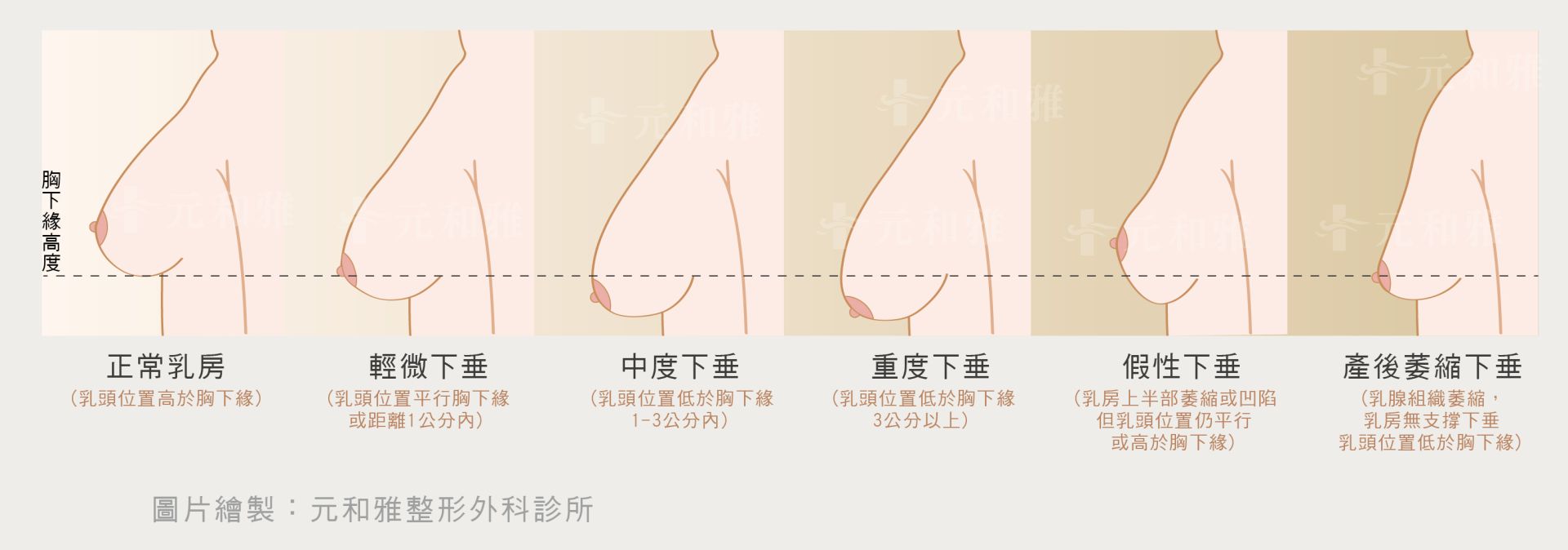
Breast Sagging Self-Assessment Form
- Mild:The nipple is within 1 centimeter of the inframammary fold.
- 中度:The nipple is below the breast fold, within a distance of 1-3 centimeters.
- 重度:The nipple is below the breast fold, with a downward distance of more than 3 centimeters, or located at the lower edge of the overall breast.
- Pseudoptosis:Although the nipple is parallel to the breast fold, most of the tissue is concentrated in the lower half.
Common breast lift surgical methods
There are several common methods for breast lift surgery, and different surgical techniques are chosen based on the degree of breast sagging:
-
Round incision breast lift method (doughnut breast lift method):
Applicable situations: mild breast sagging.
Method: This surgery makes a circular incision around the areola, lifting and reattaching the breast tissue. Scars are mostly hidden around the areola. This method can be combined with breast augmentation or areola reduction surgery to adjust for sagging and enlarged areolas. -
Vertical incision breast lift surgery:
Applicable situations: Moderate to severe breast sagging.
Method: A vertical incision is made below the areola, and the glandular tissue and areola are lifted, with excess tissue removed as needed. The surgery may include breast augmentation for better aesthetic results. The scars left after surgery are shorter and oriented vertically. -
Inverted T incision breast lift surgery:
Applicable situation: severe breast sagging.
Method: The incision is made from around the areola to below the breast, forming an inverted T shape. This surgery lifts the areola and tissue while removing excess skin or tissue, suitable for cases with significant sagging or excessive volume, leaving more noticeable scars.
The suitable groups for breast lift surgery mainly include
- Women with breast sagging after pregnancy: After pregnancy and breastfeeding, breasts may sag due to decreased skin elasticity and changes in glandular tissue.
- Women with breast atrophy after weight loss: Rapid or significant weight loss can lead to a decrease in breast volume and skin laxity, resulting in breast sagging.
- Aging breasts sag: As we age, the skin naturally ages, losing elasticity and firmness, and the breasts may gradually sag.
- Women with congenital breast sagging: Some women may experience breast sagging due to genetic factors, possibly compounded by poor bra-wearing habits, even without experiencing pregnancy or significant weight changes.
- Pursuers of aesthetic enhancement: women who wish to improve the appearance of their breasts and achieve a more lifted and youthful shape.
Common Q&A about breast lift surgery
Q: What is breast lift surgery?
A: Breast lift surgery is a cosmetic procedure aimed at improving the sagging condition of the breasts. This surgery involves removing excess skin, reshaping breast tissue, and repositioning the nipples and areolas to restore a youthful appearance to the breasts. Suitable candidates for this surgery include women who have experienced sagging due to pregnancy, breastfeeding, significant weight changes, or natural aging. This procedure can be performed independently or in combination with breast augmentation or reduction surgeries for enhanced aesthetic results.
Q: What factors can lead to breast sagging?
A: There are various reasons for breast sagging, including aging, which causes the skin and tissues to lose elasticity due to natural aging processes, atrophy of the mammary glands after pregnancy and breastfeeding, and significant weight fluctuations. Other factors such as inadequate support from bras and declines in endocrine and physiological functions can also contribute to breast sagging. Additionally, genetic factors may affect the appearance of the breasts, leading to sagging even in the absence of specific weight changes or pregnancy.
Q: How long does it take to recover after breast lift surgery?
A: The recovery time after breast lift surgery varies among individuals, but most people can gradually return to their daily activities within 6 months post-surgery. Initially, it is important to limit activities and avoid putting pressure on the wounds, especially during the first 1 to 2 weeks after the surgery. During this period, proper care such as using elastic bandages, regular massages, and following dietary recommendations can promote wound healing and reduce scar formation. The specifics of recovery will be influenced by the individual's health condition and adherence to the doctor's advice.
Q: Will breast lift surgery leave scars?
A: Yes, all breast lift surgeries will leave scars to some extent. The appearance and healing of surgical scars typically depend on the method of surgery and the individual's skin healing ability. The incision location is usually chosen to be hidden around the areola or in less noticeable areas, and the doctor will develop the most suitable surgical plan based on individual circumstances. Proper post-operative care can also help reduce the visibility of scars, and appropriate care methods include keeping the wound dry, regular check-ups, and timely follow-ups.
Q: Will breast lift surgery affect breastfeeding ability?
A: Although breast lift surgery may have some impact on certain glandular tissues, it typically does not severely affect breastfeeding ability. During the procedure, the surgeon will strive to preserve healthy glandular tissue to minimize any impact on breastfeeding. Therefore, if you plan to breastfeed in the future, it is advisable to communicate thoroughly with your doctor before the surgery to obtain relevant advice. Most patients can breastfeed normally after the surgery, but specific circumstances will still depend on individual cases.
Q: Who is the suitable demographic for breast lift surgery?
A: Breast lift surgery is primarily suitable for the following groups of women: First, those whose breasts have sagged due to decreased skin elasticity after pregnancy; second, women who have experienced rapid or significant weight loss resulting in reduced breast volume and skin laxity; additionally, women who naturally age and experience breast sagging over time may also consider this surgery; furthermore, some women who are born with naturally sagging breasts, even without experiencing pregnancy or significant weight changes, may be suitable for this procedure. Lastly, for women who wish to improve the appearance of their breasts and achieve a more youthful and lifted look, breast lift surgery is highly recommended.
Postoperative care for breast lift surgery
-
Use elastic bandages
- To reduce swelling and provide support to the breasts, elastic bandages will be used after the surgery, while also preventing hematomas.
-
Wound recovery and suture management
- In the initial 1 to 2 weeks after the surgery, the wound will begin to heal.
- As the wound gradually heals, the doctor will assess and determine the best time to remove the stitches.
- Scars are expected to gradually fade within six months.
-
Massage to promote wound recovery
- It is recommended to start regular massages from the first month after surgery to reduce scarring and tightness, with a duration of about 3 to 6 months.
-
Diet and lifestyle adjustments
- To promote wound healing, it is advisable to avoid consuming any irritating foods such as spicy foods, alcohol, tobacco (including secondhand smoke), as well as certain seafood and supplements until the stitches are removed after surgery.
- Emphasize maintaining a healthy lifestyle, avoiding staying up late and smoking.
-
Activity and Rest Recommendations
- In the early stages, activity levels should be limited to avoid unnecessary pressure or friction on the wound.
- Office work can resume after a few days of rest, while more strenuous physical labor is recommended to be postponed for at least a week.
- It is recommended to start light exercise two weeks after the surgery, and to try more intense forms of exercise only after one month.
-
Personal hygiene and wound care
- You can shower after the surgery, but you need to protect the wound with beauty gel and ensure that the wound is properly dried after washing.
-
Medication treatment and follow-up visit
- Follow the doctor's instructions for medication treatment and take oral medications on time to prevent infection.
- According to the medical team's arrangement, return for a follow-up appointment on time to check the recovery status of the wound.
-
Wearing an appropriate bra
- Wearing a well-supported bra for a long time helps with scar recovery and prevents sagging.
-
Regular tracking and assessment
- It is recommended to have regular follow-up appointments to track recovery progress and address any issues in a timely manner.
The secret to reshaping youthful breast contours
Breast lift surgery has a high threshold and needs to be performed by an experienced physician. It can effectively improve the appearance of the breasts, especially suitable for women whose breasts have sagged due to aging, weight changes, pregnancy, or breastfeeding. Breast lift surgery not only helps restore firmness and aesthetics to the breasts but also improves self-confidence. When considering breast lift surgery, it is recommended to choose an experienced and trustworthy plastic surgeon to ensure that the surgical results meet expectations and minimize risks.