PlasmaBlade
Table of Contents
- What is a low-temperature plasma knife?
- Principle and Advantages of Low-Temperature Plasma Knife
- Common surgical applications of low-temperature plasma knife
- Comparison between low-temperature plasma knife and traditional electrosurgical knife
- Common Questions about Low-Temperature Plasma Knife
- Low-temperature plasma knife comprehensively enhances the effectiveness of breast augmentation and abdominoplasty surgeries.
- The operating principle of the low-temperature plasma knife.
- Common surgical applications of low-temperature plasma knife
- Low-temperature plasma knife enables precise breast augmentation and abdominal lift with quick recovery.
- How does the low-temperature plasma knife protect tissues?
- The low-temperature plasma knife can significantly affect the postoperative recovery period.
- The 5 major advantages of the low-temperature plasma knife
- Low-temperature plasma knife cost
- Enherya uses low-temperature plasma knife to enhance surgical effectiveness!
- Advantages of Low-Temperature Plasma Knife in Breast Augmentation Surgery
- Advantages of Low-Temperature Plasma Knife in Abdominoplasty Surgery
- Advantages of Low-Temperature Plasma Knife in Breast Surgery
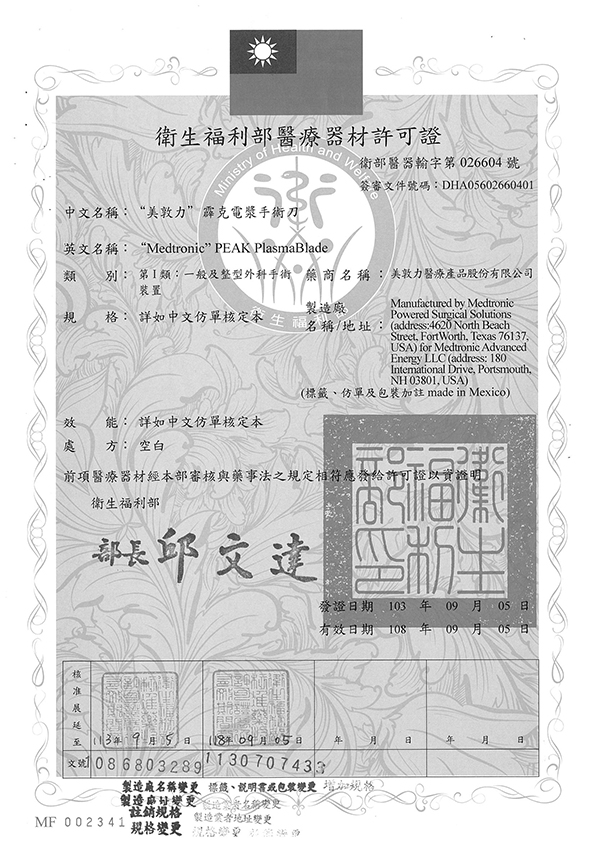
- Low Temperature Plasma Knife Ministry of Health and Welfare Medical Device License
What is a low-temperature plasma knife?
The tip temperature of a traditional electrosurgical knife can reach 200 to 350 degrees, which may cause thermal damage to the tissues it contacts, leading to postoperative infections, poor wound healing, and scar formation, and may even cause tissue carbonization.。In contrast, the plasma surgical knife (single-use) adopts a pulsed energy design, reducing the output energy, and isolates about 99.5% of the electrode edges through the Thermal Protection Shield (TPS) structure, leaving only an effective range of about 12.5μm to enhance energy transfer efficiency. The plasma knife operates at a lower temperature (40 degrees to 170 degrees).It can achieve cutting and hemostatic effects, effectively reduce tissue thermal damage, lower postoperative pain and infection risks, promote wound healing, reduce scar formation, and shorten postoperative recovery time.。
Medtronic Plasma Surgical Knife, Medical Device License No. 026604, commonly known as: Low Temperature Plasma Knife
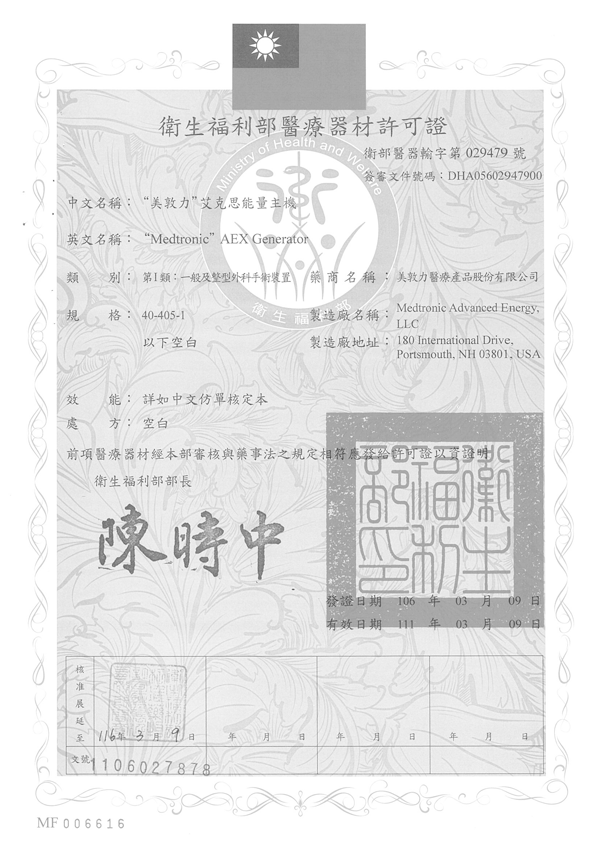
Medtronic Excell Energy Main Unit, Medical Device Registration No. 029479, commonly known as: Excell Energy Main Unit
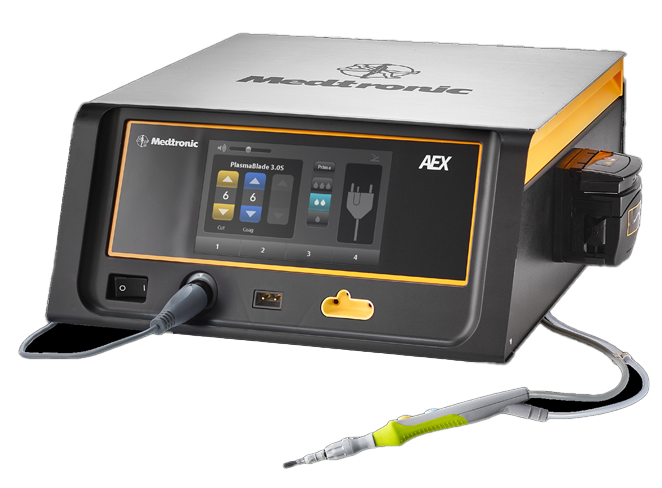
Using space ceramics to isolate heat transfer, the blade temperature is controlled at around 60 degrees, achieving cutting and hemostasis effects!
Advantages for patients
- Reduce tissue thermal damage, lower postoperative pain and infection, promote better wound healing, reduce scar formation, and shorten postoperative recovery time, with precise cutting that better preserves breast tissue!
- Shortened surgery time, reduced patient anesthesia usage.
- The carcinogens produced by low-temperature burning smoke are minimal, which simultaneously reduces the occurrence of respiratory diseases among the medical team, making it a great benefit for both doctors and patients. (Advantages for doctors and nursing staff)
 |
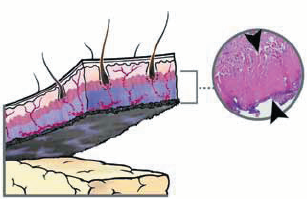 |
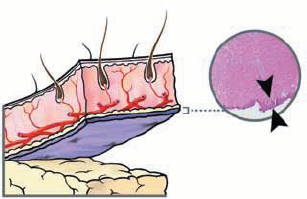
| Low-temperature plasma knifeIt can preserve intact flaps and blood vessels, significantly increasing the survival rate of flaps after surgery. | traditional electrosurgeryDestruction of flap tissue and blood vessels, the purple shaded area in the image represents thermal damage to the tissue caused by electrocautery. |
 |
 |
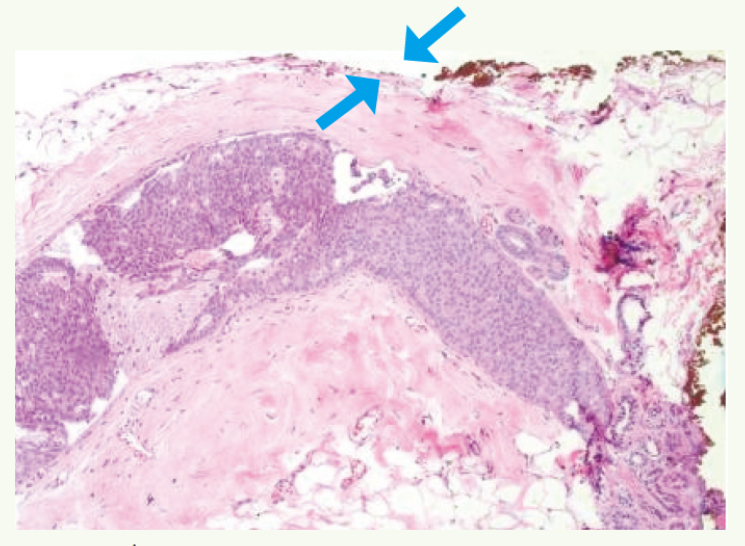
Low Temperature Plasma KnifeWound incision diagramModerate atypical hyperplasia of ductal carcinoma in situ (DCIS) shows slight thermal damage from the low-temperature plasma knife (blue arrow) and can be easily identified as benign tissue. Note that there is no attached coagulum on it. |
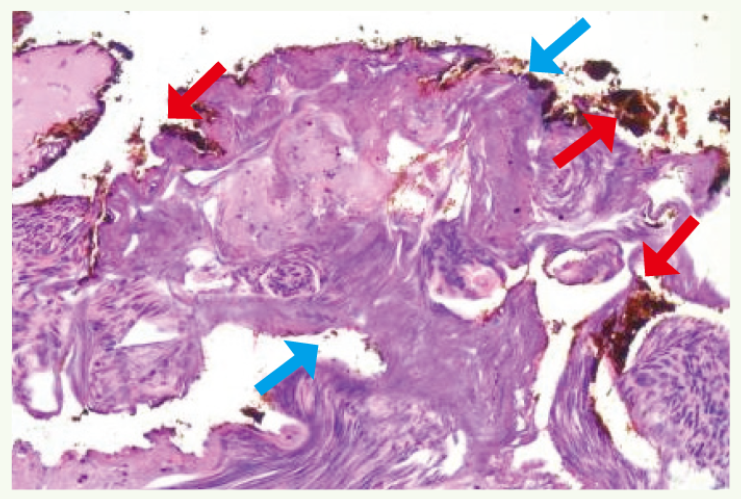
traditional electrosurgical knifeWound incision diagramThe significant deformation of benign tubular epithelial tissue caused by the extensive thermal damage (blue arrow) from traditional electrosurgical instruments presents an artificial stretching phenomenon. Note the attached necrotic tissue overlaying it (red arrow). |
(The red area represents the depth of damage to tissues caused by high temperature and thermal energy) |
|
Low Temperature Plasma KnifePrinciples and Advantages
The core technology of the low-temperature plasma knife lies in its pulsed energy design and space ceramic insulation technology, which allows its blade temperature to be effectively controlled at around 60°C, achieving the same cutting and hemostatic effects while minimizing thermal damage to surrounding tissues. This precise cutting technology not only maintains surgical accuracy but also effectively protects the breast and other sensitive tissues, avoiding damage to flap function. Surgeries using the low-temperature plasma knife often shorten operation time, reduce the amount of anesthetics used by patients, and are more beneficial for postoperative recovery.
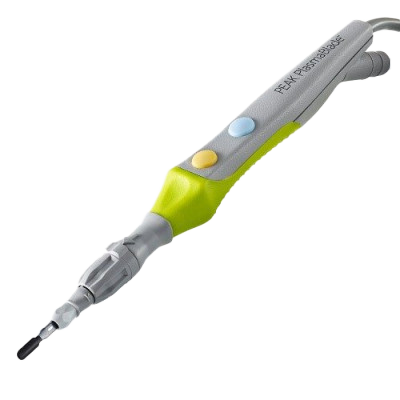
For patients, the greatest advantage of the low-temperature plasma knife is that it significantly reduces postoperative pain and infection risk, promotes the wound healing process, and decreases scar formation. Wound healing is faster, postoperative recovery time is shortened, thereby improving the overall quality of life for patients. For the medical team, the smoke generated by the low-temperature plasma knife contains fewer carcinogens, making the air quality during the surgical process safer and reducing the risk of doctors and nursing staff developing respiratory diseases.
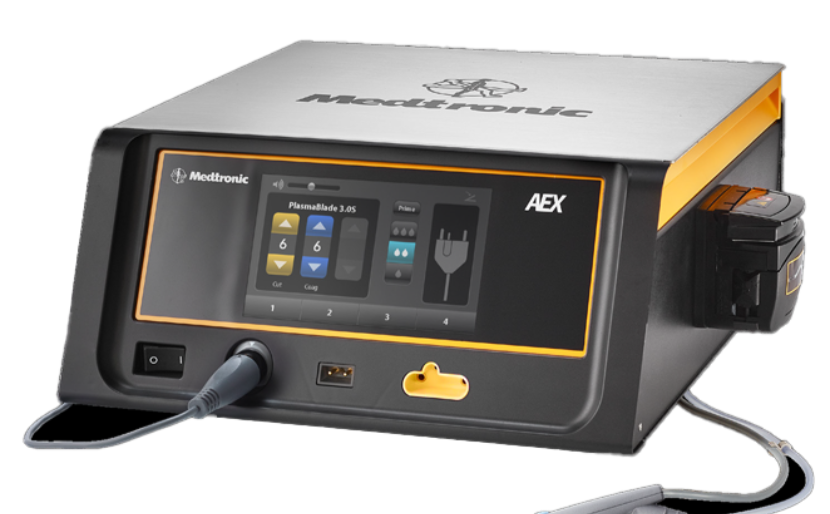
低溫電漿刀 plasma blade
Common surgical applications of low-temperature plasma knife
The low-temperature plasma knife is commonly used in many surgeries that require precise cutting and tissue protection, especially in breast surgery where it performs outstandingly. Here are some common applications:
-
Improved breast mastectomy:
While preserving the function of breast tissue, tumor removal is performed. -
Breast-conserving surgery:
For early treatment of breast cancer, the low-temperature plasma knife helps to precisely cut tumors while protecting healthy tissue. -
Simple total mastectomy surgery:
Using a low-temperature plasma knife during breast removal can reduce damage and promote postoperative recovery. -
Axillary lymph node dissection or sentinel lymph node surgery:
These surgeries require high precision, and the low-temperature plasma knife can avoid unnecessary thermal damage. -
Total mastectomy for breast cancer removal surgery:
Helps improve postoperative appearance while reducing scars and pain. -
Abdominoplasty, breast augmentation, breast reduction surgery:
The low-temperature plasma knife is also widely used in plastic surgery because it can make precise cuts and shorten postoperative recovery time.
| Features | traditional electrosurgical knife | Low-temperature plasma knife |
| Operating temperature | 200°C - 350°C | 40°C - 170°C |
| Damage to tissues | High temperature hemostasis causes significant damage. | Low temperature cutting, protecting tissue |
| postoperative pain | 較大 | Reduced pain sensation |
| Postoperative recovery time | 較長 | 較快 |
| Cutting efficiency | In some cases, efficiency is relatively poor. | Precision cutting, efficiency improvement |
| surgery time | 較長 | shorten surgery time |
| Risks to the surgical team | Generate more carcinogenic smoke | Less smoke, higher safety. |
Common Questions about Low-Temperature Plasma Knife
1.Low temperatureWhat is the difference between a plasma knife and a traditional electrosurgical knife?
The operating temperature of the plasma knife is between 40°C and 170°C, which is much lower than the 200°C to 350°C of traditional electrosurgical knives. This allows the plasma knife to reduce thermal damage during surgery, decrease postoperative pain and infection, and accelerate postoperative healing.
2.低溫What are the main advantages of the plasma knife?
The advantages of the plasma knife include:
- reduce tissue thermal damage, lower postoperative pain and infection risk
- Increase surgical precision, shorten surgical time
- Reduce the formation of postoperative scars
- Reduce surgical smoke and protect the health of the medical team.
- Promote faster wound healing
3. Use低溫How is the wound healing effect after using the plasma knife?
The plasma knife can provide healing effects comparable to those of a surgical knife. Studies show that the inflammatory response and scar width it induces are similar, but due to less thermal damage, the wound healing speed is usually faster, and there are fewer scars.
4.Low temperatureDoes the plasma knife produce surgical smoke?
Although the plasma knife produces surgical smoke, it generates much less smoke than traditional electrosurgical knives, which is very helpful in improving the air quality in the operating room and reducing the risk of medical personnel being exposed to carcinogens.
5. Use低溫Can the plasma knife shorten the surgery time?
Yes, the plasma knife can effectively stop bleeding while making precise cuts, which usually shortens the surgery time, reduces the amount of anesthesia used, and speeds up the patient's postoperative recovery.
6.Low temperatureWhat are the specific advantages of the plasma knife for breast surgery?
In breast surgery, the plasma knife can reduce thermal damage, protect breast tissue, maintain the integrity of the flap function, reduce postoperative pain and scarring, shorten drainage time, and enhance the overall surgical experience and postoperative satisfaction of patients.
7.低溫How safe is the plasma knife?
The plasma knife has high safety, using Thermal Protection Shield (TPS) technology, effectively isolating 99.5% of the electrode edge, leaving only a very small cutting area, reducing damage to surrounding healthy tissue.
8.Low temperatureCan the plasma knife be used for breast augmentation and breast reduction surgery?
Yes, the plasma knife also performs excellently in plastic surgery, such as breast augmentation, achieving precise cuts while simultaneously reducing thermal damage, which is very helpful in enhancing surgical outcomes and patient satisfaction.
9.Low temperatureCan the plasma knife be used for minimally invasive surgery?
Yes, the plasma knife is very suitable for minimally invasive surgery. Due to its precise cutting ability and lower operating temperature, it can reduce damage to surrounding tissues, making it particularly suitable for minimally invasive surgeries that require high protection for delicate tissues.
10.Low temperatureWill the plasma knife leave scars after use?
Compared to traditional electrosurgical knives, the plasma knife produces less thermal damage, greatly reducing the risk of scarring. Studies show that the scar width after cutting with a plasma knife is comparable to that of a surgical knife, but due to reduced thermal damage, the scars are usually less severe and heal faster.
11.低溫How is the cutting effect of the plasma knife in surgery?
The plasma knife can provide precise cutting effects, similar to a surgical knife, while possessing excellent hemostatic capabilities. This makes it perform exceptionally well in surgeries that require precise cutting and rapid hemostasis, such as breast surgery or plastic surgery.
12.Low temperatureHow does the plasma knife reduce surgical drainage?
The plasma knife can perform cutting and hemostasis at lower temperatures, reducing damage to surrounding tissues, thereby decreasing postoperative drainage volume and drainage time. In breast surgery, after using the plasma knife, the average drainage volume is significantly reduced, and the drainage tube removal time is shortened by about 2.4 days.
13.低溫Is the plasma knife suitable for elderly or weak patients?
The plasma knife is safer for elderly or frail patients due to its lower operating temperature and less thermal damage. It can reduce the risk of postoperative complications, shorten recovery time, and make the postoperative recovery process smoother for these patients.
14.Low temperatureDoes the plasma knife increase surgical costs?
Although the plasma knife itself may be more expensive than traditional electrosurgical knives, it can ultimately reduce overall medical costs by shortening surgery time, reducing drainage volume, and lowering the risk of postoperative complications, especially for patients with faster recovery speeds and shorter hospital stays.
15. Will using a low-temperature plasma knife extend the surgery time?
No, the plasma knife can usually shorten the surgery time. Due to its precise cutting and quick hemostatic ability, doctors can perform surgeries more efficiently, and patients recover faster post-operation, which also helps reduce hospital stay.
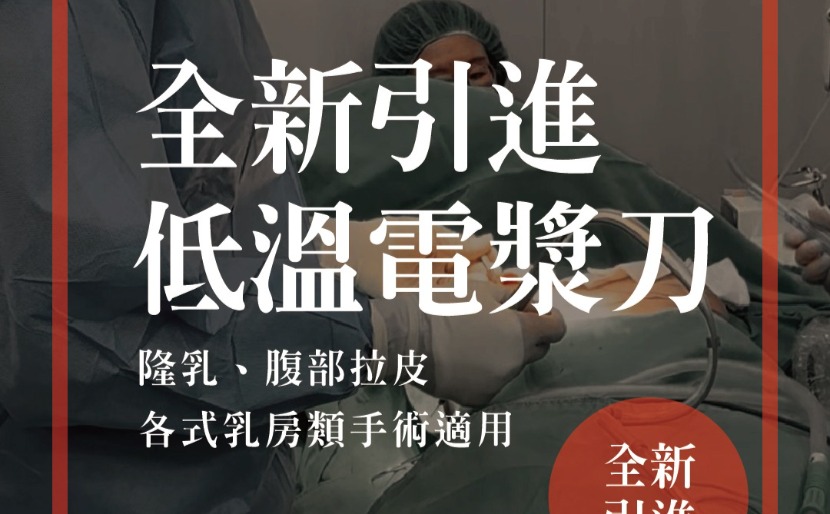
Enherya low-temperature plasma knife breast augmentation, reduces pain, quick recovery!
Low-temperature plasma knife comprehensively enhances the effectiveness of breast augmentation and abdominal lift surgeries.
Do you desire to have the ideal body but are concerned about the pain and scars from surgery? The risks and inconveniences of recovery in traditional surgeries often deter people. However, with the advancement of medical technology, the emergence of the low-temperature plasma knife has brought innovation to plastic surgery, allowing you to pursue beauty with more confidence and ease!
More and more people are choosing to achieve their ideal appearance through cosmetic surgery, especially breast augmentation and tummy tuck surgeries. They are very concerned about the surgical results, safety, and postoperative recovery period, and the low-temperature plasma knife offers significant advantages in all three aspects. Enherya uses the low-temperature plasma knife for surgeries, with the operating temperature controlled between 40-170°C, reducing damage to surrounding tissues, speeding up postoperative recovery, and achieving results far superior to traditional electrosurgical knives.
The operating principle of the low-temperature plasma knife
Low-temperature plasma knife, also known as plasma surgical knife, operates on the principle of using high-frequency current to generate plasma for cutting and coagulating tissue.
●Generation of plasma: The tip of the plasma knife's probe releases high-frequency electric current, causing the gas molecules (usually air) passing through to ionize and form plasma.
● Tissue cutting and hemostasis: Plasma has high energy, which can instantaneously vaporize tissue using the high energy of the plasma to achieve cutting effects. At the same time, the thermal energy generated by the plasma can coagulate blood and tissue fluids to achieve hemostasis.
●Low Temperature Control: Unlike traditional electrosurgical knives, the low-temperature plasma knife uses a pulsed energy design and employs Thermal Protection Shield (TPS) technology to isolate the edges of the electrode, concentrating energy delivery to the target tissue group. Combined with the thermal insulation technology of space ceramics, the blade temperature is effectively controlled between 40°C and 170°C, and can even be as low as around 60°C.
The low-temperature plasma knife enables effective cutting and hemostasis while minimizing thermal damage to surrounding tissues.
The main advantages of the low-temperature plasma knife:
Reduce postoperative pain and infection risk
Promote wound healing
Reduce scar formation
Less anesthesia dosage
Shorten postoperative recovery time
Common surgical applications of low-temperature plasma knife
The low-temperature plasma knife is widely used in various surgeries due to its advantages of precise cutting, reduced thermal damage, and promotion of postoperative recovery, especially in surgeries that require fine manipulation and protection of tissue function. Here are some common surgical applications:
breast surgery
● Improved breast mastectomy: While removing breast tissue affected by cancer cells, the goal is to preserve as much healthy breast tissue as possible. The low-temperature plasma knife can assist in precisely excising the tumor while protecting the surrounding healthy tissue.
● Breast-conserving surgery: For the treatment of early-stage breast cancer, the low-temperature plasma knife helps to precisely remove tumors while maximizing the preservation of healthy breast tissue.
●Simple total mastectomy: When performing a mastectomy, using a low-temperature plasma knife can reduce damage to surrounding tissues and promote postoperative recovery.
● Axillary lymph node dissection or sentinel lymph node surgery: These types of surgeries require high precision, and the low-temperature plasma knife can avoid unnecessary thermal damage to the lymph nodes and surrounding tissues.
● Total mastectomy: While removing the tumor, the low-temperature plasma knife can help reshape the breast, improve postoperative appearance, and reduce scarring and pain.
Other surgeries
●Abdominoplasty: The low-temperature plasma knife can be used to remove excess skin and fat from the abdomen, tighten abdominal muscles, reduce tissue trauma, promote postoperative recovery, and minimize scar formation.
●Breast augmentation surgery: The low-temperature plasma knife can be used to precisely create space in the tissue for placing implants while minimizing damage to surrounding tissues.
Minimally invasive surgery: The low-temperature plasma knife is very suitable for minimally invasive surgery because it can make precise cuts and stop bleeding while reducing damage to surrounding tissues.
The application range of the low-temperature plasma knife is extensive, so please be sure to consult a professional physician.
Low-temperature plasma knife allows for precise and quick recovery in breast augmentation and abdominoplasty.
Plasma knives are widely used in cosmetic surgery, and Enherya is particularly applied in breast augmentation and abdominoplasty surgeries that require precise cutting and tissue protection.
breast augmentation surgery
● Precise tissue cutting and protection: The low-temperature plasma knife can precisely create space in the tissue for implant placement while minimizing damage to surrounding tissues as much as possible.
●Reduce postoperative pain and scarring: Because the low-temperature plasma knife can effectively reduce thermal damage, its use in breast augmentation surgery can reduce postoperative pain, infection risk, and scarring, and shorten recovery time.
Abdominoplasty surgery:
● Remove excess tissue and tighten muscles: The low-temperature plasma knife can be used to remove excess skin and fat from the abdomen and tighten the abdominal muscles, achieving an improved abdominal appearance.
● Reduce tissue trauma and promote postoperative recovery: The low-temperature plasma knife can also reduce tissue trauma and promote postoperative recovery in abdominal lift surgery, as well as reduce scar formation.
In summary, the low-temperature plasma knife can effectively reduce postoperative pain, scarring, and recovery time in breast augmentation and abdominoplasty surgeries through precise cutting and protection of the tissue.
How does the low-temperature plasma knife protect tissues?
The main difference between the low-temperature plasma knife and the traditional electrosurgical knife in protecting tissues during surgery lies in the operating temperature and the method of energy transfer:
●Lower temperature: The temperature of traditional electrosurgical knives can reach 200°C to 350°C, while the low-temperature plasma knife only requires 40°C to 170°C to achieve cutting and hemostatic effects. The lower temperature can effectively reduce thermal tissue damage, lower postoperative pain and infection risk, promote wound healing, reduce scar formation, and shorten postoperative recovery time.
● Pulsed energy and thermal insulation design: The low-temperature plasma knife adopts a pulsed energy design and utilizes Thermal Protection Shield (TPS) technology to isolate approximately 99.5% of the electrode edge, retaining only about 12.5μm of effective range, concentrating energy transmission to the target tissue group. In addition, the thermal insulation technology of space ceramics can control the blade temperature to around 60°C, further reducing thermal energy diffusion to surrounding tissues and protecting surrounding tissues from unnecessary thermal damage.
The low-temperature plasma knife concentrates thermal energy on the target tissue group through lower temperatures, pulsed energy, and thermal insulation design, thereby reducing thermal damage to surrounding tissues and achieving the goal of protecting tissues.
Low-temperature plasma knife can significantly affect the postoperative recovery period.
●Shorten surgery time: Due to precise cutting and good hemostatic effect, using a low-temperature plasma knife can shorten the surgery time. A reduction in surgery time means a decrease in the amount of anesthesia used, which also helps to speed up postoperative recovery.
● Reduce drainage: The low-temperature plasma knife can perform cutting and hemostasis at lower temperatures, reducing damage to surrounding tissues, thereby decreasing postoperative drainage volume and drainage time. In breast augmentation surgery, after using the low-temperature plasma knife, the average drainage volume significantly decreased, and the drainage tube removal time was shortened by about 2.4 days.
The 5 major advantages of the low-temperature plasma knife
●Relieve discomfort: Low-temperature operation reduces postoperative pain, making the recovery process more comfortable and easier.
●Natural hidden scars: Studies show that the scar width after using the plasma knife is comparable to that of a surgical knife, but due to reduced thermal damage, the scars are usually less severe and heal faster, resulting in a more natural and delicate postoperative effect.
● Efficient recovery: shorter surgery time, less anesthesia usage, less bleeding, and significantly shorter postoperative recovery period.
●Precision shaping: More accurately cut tissue, preserving more healthy tissue.
●Reduce surgical smoke: Traditional electrosurgical knives produce a large amount of smoke during the surgical process, which can affect health. In contrast, the low-temperature plasma knife generates less smoke, providing a safer air quality in the operating room.
Cost of low-temperature plasma knife
The cost of the plasma knife is usually around NT$15,000 to NT$20,000, and in most cases, it is an additional charge for other surgeries.
Enherya uses low-temperature plasma knife to enhance surgical effectiveness!
Enherya currently uses low-temperature plasma knife technology for breast augmentation, breast reduction surgery, and abdominal lift surgery. With our professional medical team's years of experience, we provide safe, effective, and comfortable treatment plans for each customer. If you have ever wanted to pursue a more beautiful self through plastic surgery but have hesitated due to concerns about a long recovery period or fear of pain, please feel free to contact us anytime. Let Enherya help you understand your true needs and assist you in realizing your dream of beauty!
Advantages of Low-Temperature Plasma Knife in Breast Augmentation Surgery
In breast augmentation surgery, the low-temperature plasma knife can significantly reduce thermal damage to surrounding tissues, allowing for more precise separation of tissues during the procedure, reducing bleeding and pain, while also protecting the mammary glands and nerves, providing better assurance for future breastfeeding. Compared to traditional electrosurgical knives, the low-temperature plasma knife enables surgeons to create the implant space more delicately, promotes faster tissue recovery, effectively reduces postoperative bruising and swelling, and enhances surgical safety and postoperative comfort.
Advantages of Low-Temperature Plasma Knife in Abdominoplasty Surgery
Abdominal lifting is a larger-scale surgery, and using a low-temperature plasma knife can significantly reduce blood loss and intraoperative seepage, helping to shorten surgery time and wound recovery period. Due to its low-temperature characteristics, it causes less damage to the fat layer and subcutaneous tissue, which not only reduces the risk of postoperative infection but also improves the quality of scar healing. This technology is particularly suitable for patients who require precise sculpting of contours and enhanced surgical accuracy.
Advantages of Low-Temperature Plasma Knife in Breast Augmentation Surgery
For surgeries like breast augmentation that involve glandular excision and breast shape remodeling, the gentle cutting and hemostatic functions of the low-temperature plasma knife are key to significantly enhancing safety. It can effectively reduce intraoperative bleeding and postoperative hematomas, lower the likelihood of needing drainage tubes, and significantly shorten postoperative pain and recovery time, allowing patients to return to their daily lives more quickly. At the same time, due to less tissue damage, it also helps improve the future smoothness of the breast appearance and skin adherence.
Low Temperature Plasma Knife Ministry of Health and Welfare Medical Device License